

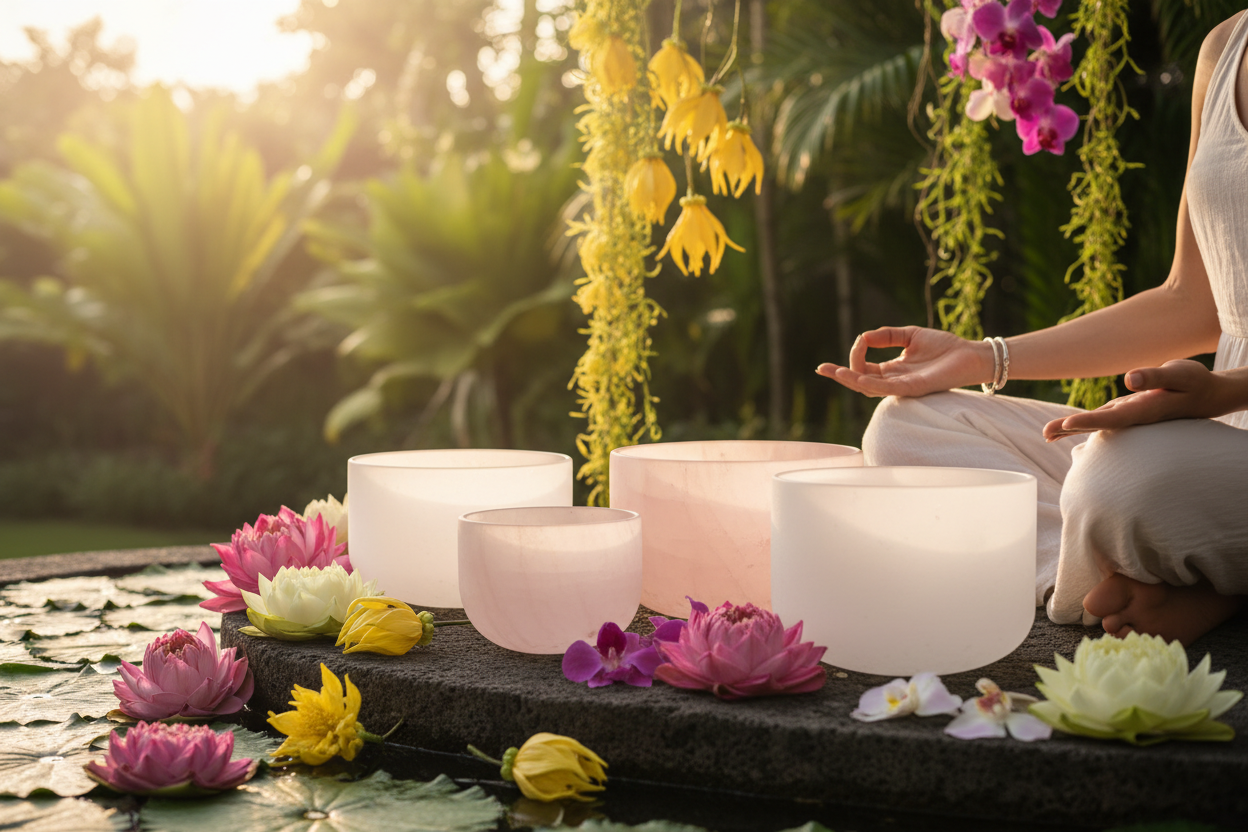
Sound has been used for thousands of years in healing traditions — from Tibetan singing bowls to Vedic chanting to indigenous drumming ceremonies. Today, "sound frequency therapy" is trending in wellness retail. But with popularity comes misinformation, and some of what's being sold in stores right now is doing more harm than good — not physically, but to your understanding of what sound can genuinely offer.
At Natureworks, we believe an informed customer is an empowered one. So let's talk about what sound frequency actually is, what the science says, and where the line is between legitimate wellness support and unfounded claims.
What Is Sound Frequency?
Sound is vibration. Every sound has a frequency, measured in hertz (Hz) — the number of vibrations per second. The human ear hears roughly 20 Hz to 20,000 Hz. Different frequencies create different sensory experiences, and yes, sound can affect the body and nervous system in measurable ways.
What's well-supported:
- Binaural beats (two slightly different tones played in each ear) can influence brainwave states and support relaxation
- Low-frequency vibration can reduce perceived stress and lower cortisol in some studies
- Sound baths and singing bowl sessions have shown measurable reductions in anxiety and tension
- Music therapy is a legitimate, evidence-based clinical field
Where the Misinformation Lives
Here's what some retailers are claiming — and why it matters that you know the truth:
❌ "432 Hz heals your DNA"
This is one of the most widely repeated claims in wellness retail — and it has no scientific basis. There is no peer-reviewed evidence that tuning music to 432 Hz (vs. the standard 440 Hz) repairs cellular or genetic damage. The difference between these tunings is subtle and largely imperceptible to most listeners.
Want to go deeper on this specific claim? This article breaks it down thoroughly: The Curious Case of 432 vs. 440 — a balanced, well-researched look at where this idea came from and what the evidence actually shows.
❌ "This frequency cures [specific condition]"
Sound frequency tools are wellness supports — not medical treatments. No tuning fork, singing bowl, or frequency app can diagnose, treat, or cure any disease. When a retailer makes this claim, they are in violation of FTC guidelines and, more importantly, misleading people who may be seeking real help.
❌ "Solfeggio frequencies unlock chakras and remove toxins"
Solfeggio frequencies are rooted in Gregorian chant tradition and carry genuine cultural and spiritual significance. But claims that specific Hz values "remove negative energy from cells" or "detoxify the body" are not supported by science. Spiritual practice is valid — but it should be presented as such, not dressed up as biology.
What Sound Wellness Can Genuinely Offer
Sound frequency tools, when used with honest intention, can be a beautiful part of a holistic wellness practice:
- Stress reduction — Sound baths and binaural beats support the parasympathetic nervous system
- Mindfulness anchoring — Tones and vibration help bring attention inward during meditation
- Emotional regulation — Music and sound have well-documented effects on mood
- Sleep support — Delta-wave frequencies (0.5–4 Hz) are associated with deep sleep states
- Community and ceremony — Group sound experiences carry real social and spiritual value
How to Shop Smart for Sound Wellness Tools
When evaluating a sound frequency product or practice, ask:
- Does the seller cite peer-reviewed research — or just testimonials?
- Are they making specific medical claims? (Red flag.)
- Is the spiritual/traditional context honored honestly, or is it being co-opted for marketing?
- Does the product support your practice — or promise to replace professional care?
What We're Seeing in Stores — and Why It Concerns Us
Recently, we came across a retail store selling crystal sound bowls tuned to 440 Hz — with no context, no education, and no transparency for the customer standing there trying to make an informed choice. Just a price tag and a vague promise of "healing."
This is happening more and more as sound wellness goes mainstream. Retailers chase the trend without doing the homework. Customers walk out believing they've invested in something transformative, with no understanding of what they actually purchased or how to use it intentionally.
We're not here to shame anyone. We're here to raise the standard. Because you deserve to know what you're buying — and why it matters.
Why Natureworks Is Different
Dawn didn't discover sound healing last year. She's been living it for decades — long before crystal bowls appeared in gift shops and "528 Hz" became a hashtag. Natureworks was built from that depth of knowing: years of personal practice, study, and an unwavering commitment to carrying only what she genuinely believes in.
That means every product at Natureworks is curated with intention. We ask the hard questions before anything reaches our shelves — about tuning, about sourcing, about the integrity of the claims being made. We won't carry something just because it's trending. And we'll always tell you the truth about what it can and cannot do.
We are also always learning. The world of sound wellness is deep and ever-evolving, and we approach it with humility — committed to growing our knowledge alongside our community, and always doing the right thing, even when it's not the easy thing. Authenticity isn't a brand value for us. It's a way of life.
That's not a marketing position. That's just who we are.
The Bottom Line
Sound is powerful. Vibration is real. And the ancient traditions that worked with sound knew something profound — they just didn't need to exaggerate it to make it meaningful.
At Natureworks, we carry only what we believe in, and we'll always tell you the truth about what something can and cannot do. That's the standard we hold ourselves to, and the standard we think every wellness retailer should meet.
Have questions about sound wellness tools or want guidance on building a grounded practice? Reach out — we're here.


